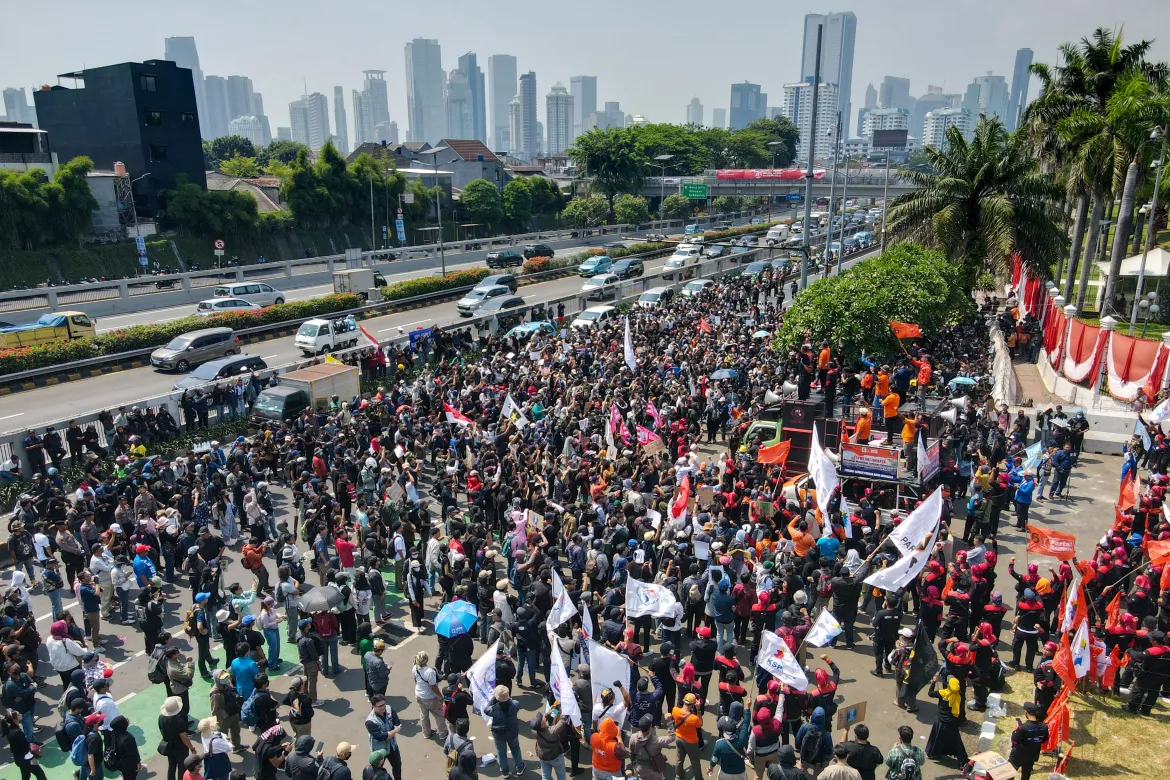
There is considerable academic consensus that Indonesia experienced democratic decline under the presidency of Joko “Jokowi” Widodo from 2014 to 2024. However, the link between an increasingly authoritarian political tendency and Jokowi’s neo-liberal agenda remains under-explored. This article scrutinises the resurgence of authoritarian neo-liberal tendencies over Jokowi’s decade in power. Through in-depth interviews with members of parliament, civil society organisations, and labour activists, it is argued that Jokowi’s authoritarian neo-liberalism occurred through two processes that shifted key elements of democracy and decentralisation: first, the recentralisation of regulatory and decision-making authority from local governments to the central government and second, a strengthening of the regulatory authority of the executive branch at the expense of legislative bodies. The article argues that these processes were not the result of the administration’s ambition to accumulate political power, but rather form a strategy to further its pursuit of a neo-liberal agenda. Hence, the neo-liberal agenda is at the heart of Jokowi’s authoritarian turn. This is illustrated by assessing Jokowi’s efforts to ratify the Omnibus Law on Job Creation in 2020.