The recent development on the tariffs imposed by President Trump on the U.S’ trad-ing partners countries has raised controversies. Not only in the targeted countries, but the tariffs issues also generated controversies within the U.S. Domestic political battles between President Trump as the highest office holder in the executive branch of power and the Supreme Court of the United States (SCOTUS) in the judicial power continues and will certainly impact how various trade deal President Trump has signed with many countries, Indonesia included.
On April 2nd, 2025, by using his interpretation of the International Emergency Eco-nomic Powers (IEEPA), President Trump announced the so-called “Liberation Day” Ex-ecutive Order that imposed 32% reciprocal tariff on Indonesia. Not only Indonesia, but President Trump also imposed various rates to other countries he deemed as causing trade imbalance to the US. However, there was 90-day pause to give window for negotiation to which countries were responding. In late July 2025, Indonesian and the US negotiators reached a framework agreement in which the 32% tariffs was then reduced to 19%.
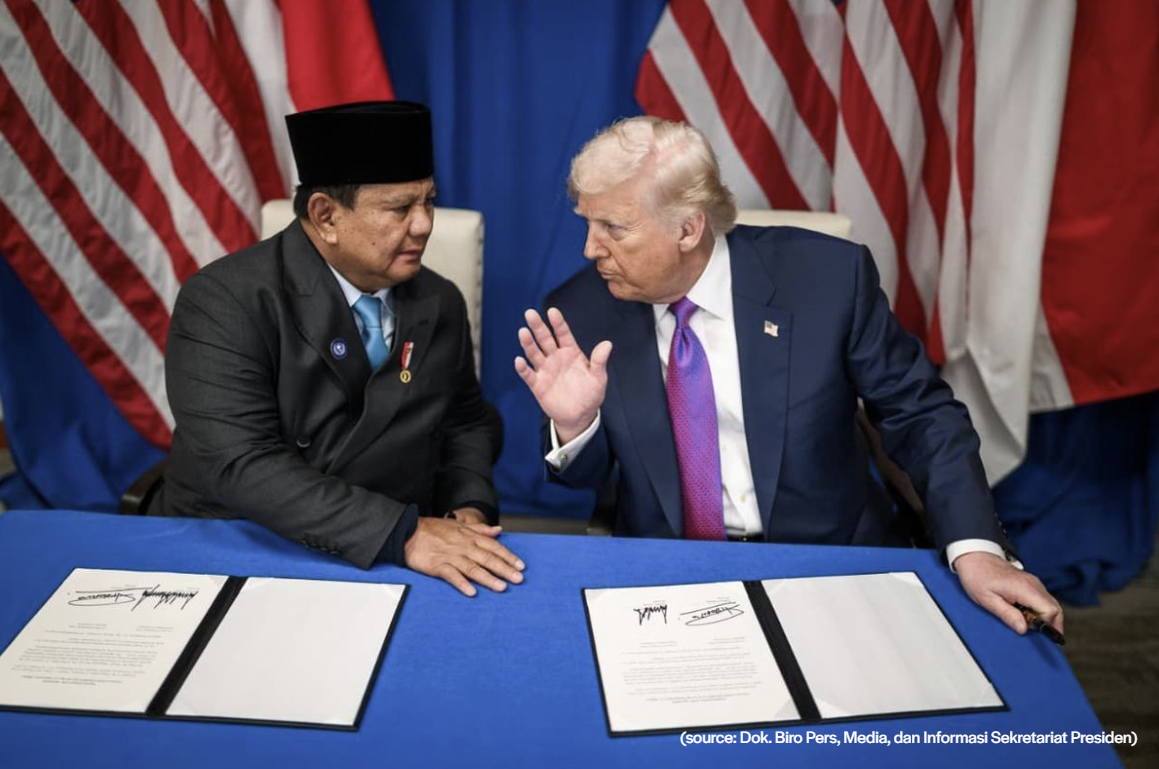
Eventually, Presidents Prabowo Subianto and Donald Trum signed the Bilateral Agreement of Reciprocal Trade (ART) on February 19th, 2026. It was met by the SCO-TUS’ decision in the next day that invalidated President Trump’s use of IEEPA in the Liberation Day executive order.1 In response, President Trump implemented the Section 122 Tariffs of 10 % only to be raised within hours to 15%.