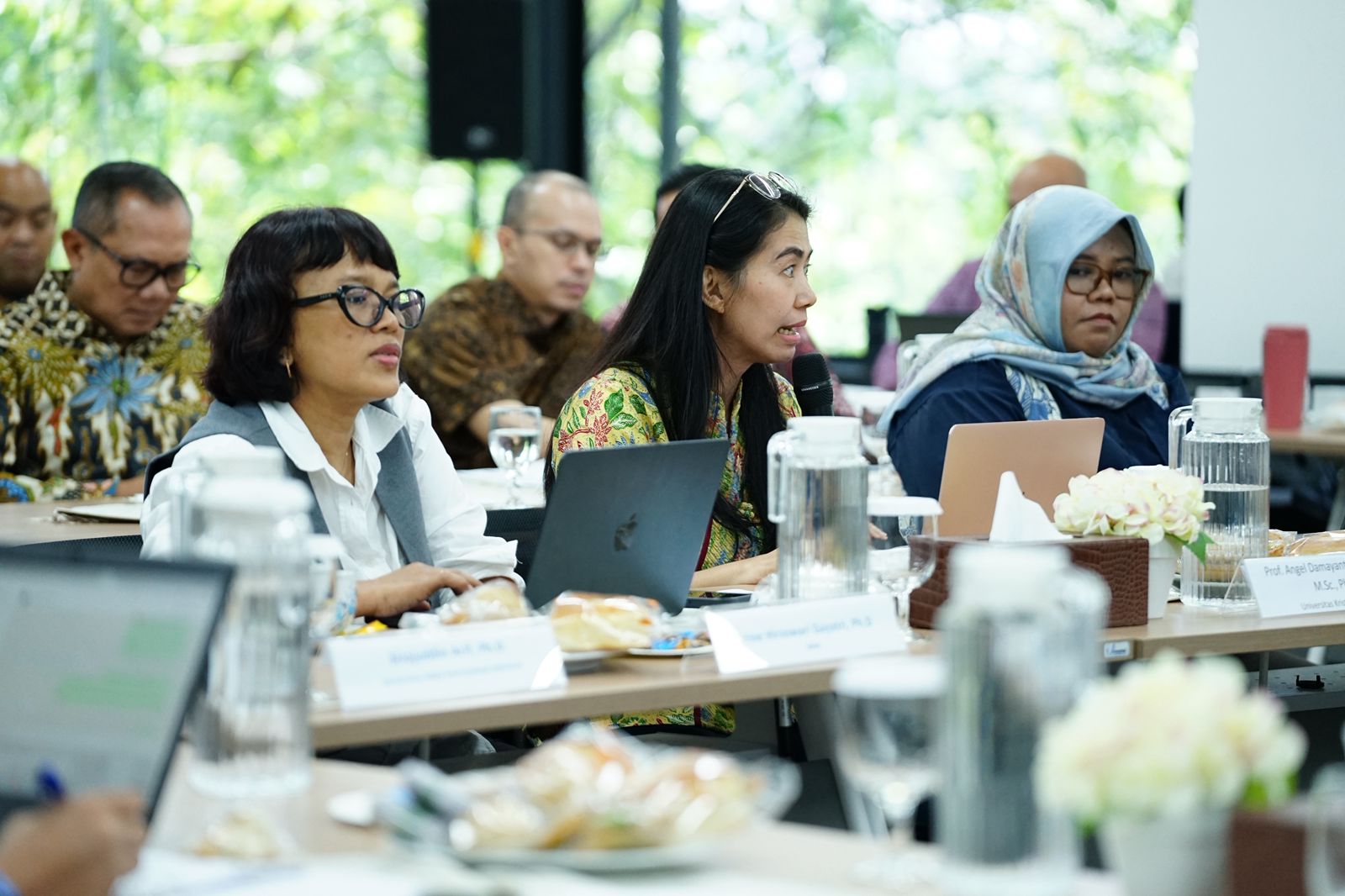
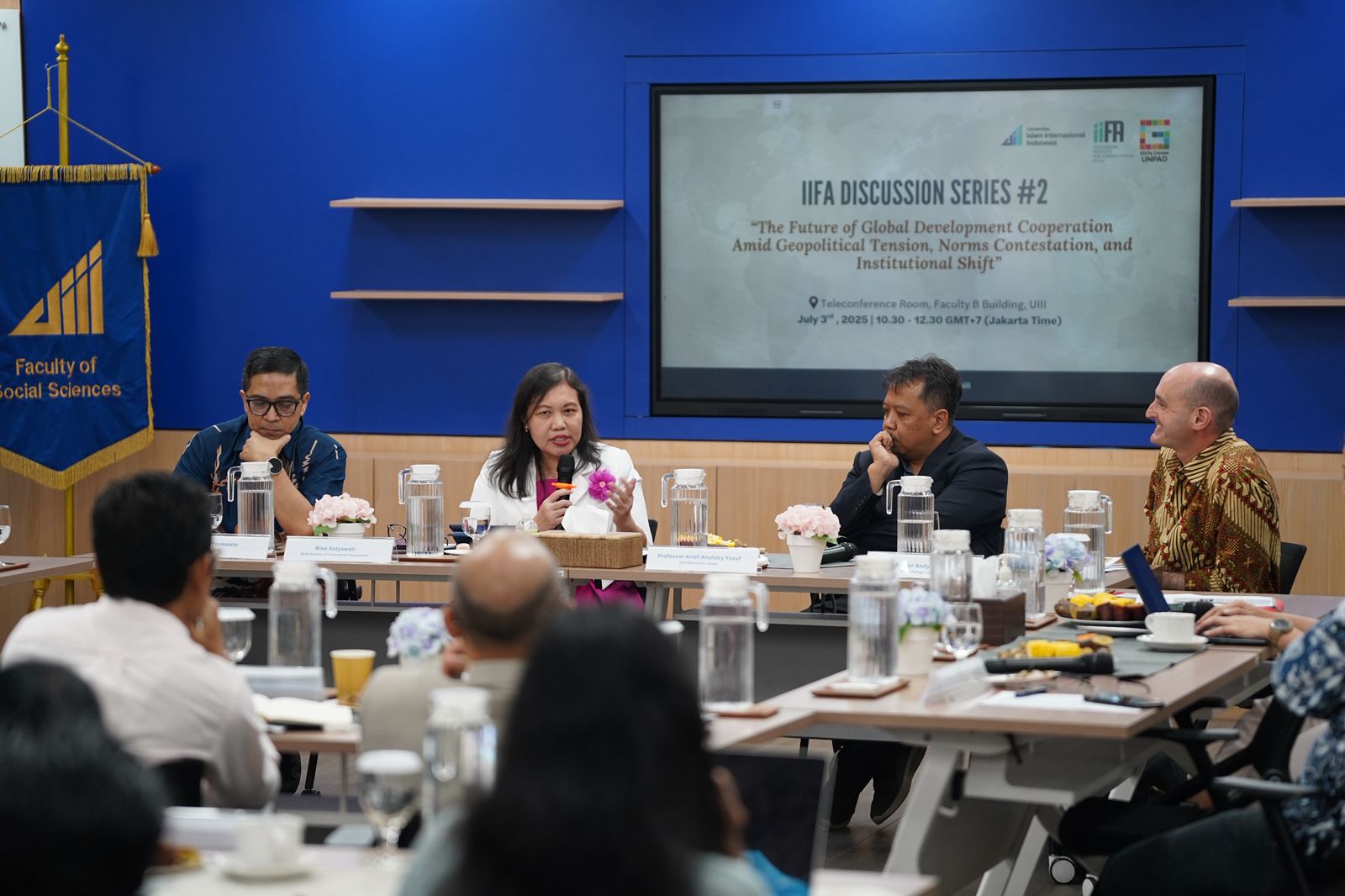
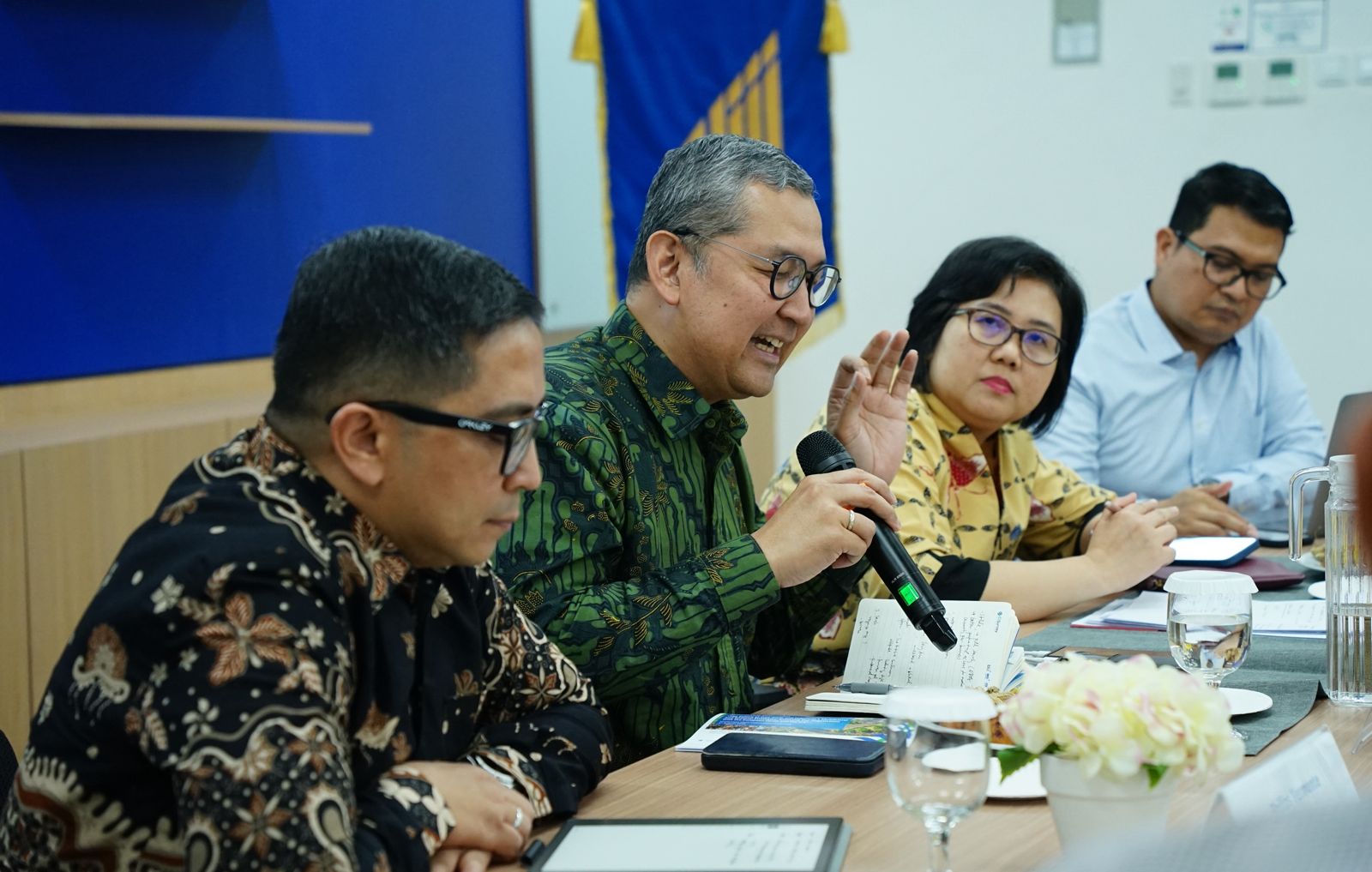
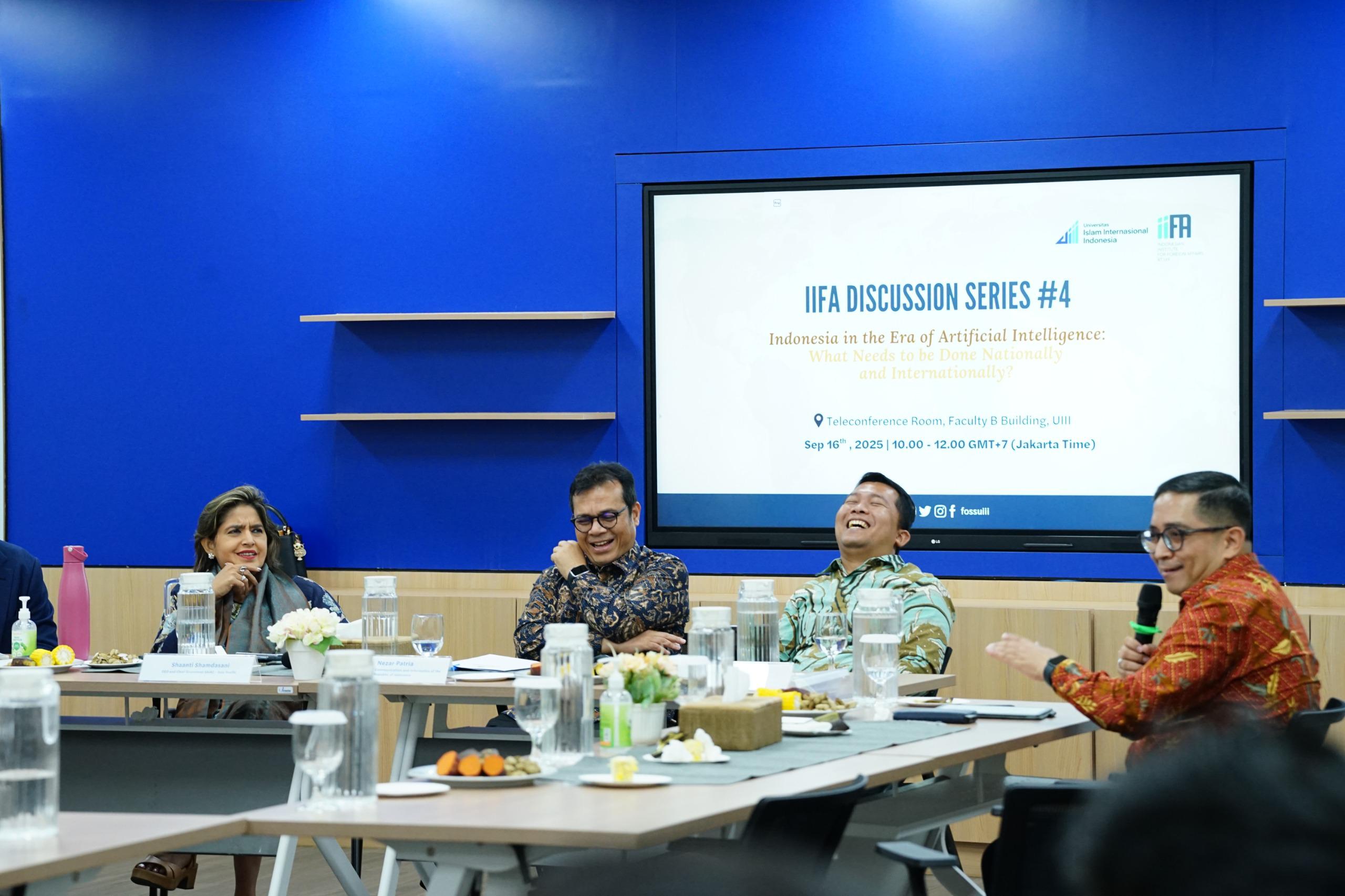
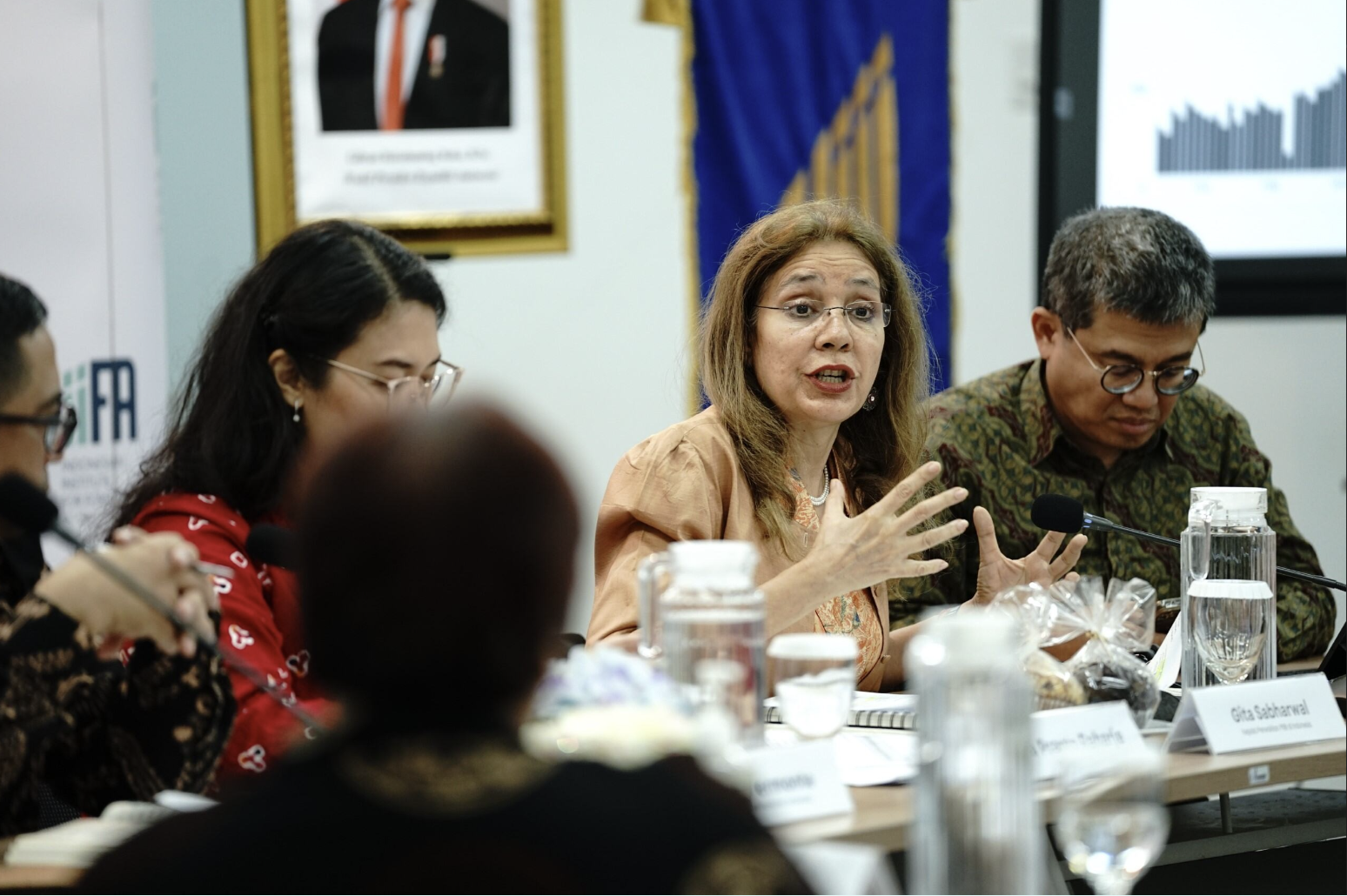
[Depok, Indonesia] — The Focus Group Discussion (FGD) in formulating the grand design of the Indonesia Aid was held at the Teleconference Room, Universitas Islam Internasional Indonesia (UIII) campus on Monday, September 22, 2025. The event was a collaboration between IIFA, KEMLU (Indonesian Ministry of Foreign Affairs), and Mandala Consulting. The objective of the event is to obtain perspectives from academicians in formulating the Indonesian Grand Design of International Development Cooperation (GDKSPI). The goal is to enhance Indonesia's position as a credible and responsive development partner on the global stage.
The FGD was formally opened by Professor Djamhari, Ph.D., Rector of UIII. In his opening remarks, Prof. Djamhari emphasized that UIII served as the frontline in promoting Indonesia on the international stage. This is due to its role as a pioneer among Indonesian public universities in bringing in international students and faculty members to study and teach. UIII actively promotes Pancasila, the five principles unifying Indonesia as a nation, to the global audience through education. Furthermore, Philips J. Vermonte, Dean of the Faculty of Social Sciences of UIII, coined the term “kampus diplomasi” (the campus of diplomacy) for UIII because it’s also part of KEMLU and could serve as an instrument of diplomacy. In her remarks, Rina Setyawati, Director of International Development Cooperation at KEMLU, reiterates the importance of development cooperation as a strategic tool of diplomacy. As a result of the shifting of power among global actors, Indonesia, as an emerging development partner representing the Global South, has a greater responsibility in supporting international development cooperation. Thus, a close partnership with the academic community is essential in formulating the GDKSPI.
The discussion started with the presentation of preliminary findings by Mandala Consulting. They found that Indonesia lacks a clear vision in implementing international development cooperation. Thus, the execution of international development cooperation remains in a state of business as usual, trapped in the logic of “penyerapan anggaran” (if funds aren’t spent, they will be forfeited in the next budget cycle). As a result, the impact of the Indonesian aid was limited and failed to reach its maximum potential.
Maharani Putri (Director of Foreign Relations, Bappenas) and Noviyanti (Head of the Bureau of International Technical Cooperation, Ministry of State Secretariat) gave their remarks, explaining the current progress and providing inputs on the formulation of GDKSPI.
Three panelists, Teguh Yudo Wicaksono, Ph.D. (IIFA), Asra Virgianita, Ph.D. (Universitas Indonesia), and Lina A. Alexandra, Ph.D. (CSIS), provided feedback for the findings. In addition, Irine Gayatri, Ph.D. (BRIN), Prof. Angel Damayanti, Ph.D. (Universitas Kristen Indonesia), Sirojuddin Arif, Ph.D. (IIFA), and Rhapsagita Pamasiswi (LPEM FEB, UI) as active participants provided their responses and inputs on GDKSPI.
Two takeaway points from the discussion. First, with the shifting global power landscape, a clear vision of Indonesia’s national interests is essential as a foundation for formulating GDKSPI. It will help to synergize the disbursement of Indonesian development aid, thereby enhancing the flow of Indonesia’s investments abroad. Teguh Yudo Wicaksono argued that “For the time being, national interests are a dominant force, including when we talk about development cooperation among countries.” Dean Vermonte added that, in terms of the priority area of cooperation, “We have to assess which area has the optimum economic return to Indonesia.” Sirojuddin Arif added that “we have to change our perspective from inward looking to outward looking if we want to be a development partner”. Noviyanti said that Indonesia has been a donor country since 1977. Maharani Putri contends that the donor mindset has been adopted in the National Mid-term Development Plan (RPJMN) document. She stated that “In the RPJMN, we shifted from the notion of sovereignty and solidarity into economic diplomacy.”
Second, there is an urgent need for institutional reform to improve Indonesia’s role in development cooperation. “We want to transform LDKPI into a professional and independent agency in managing development cooperation,” Maharani said. This is a response to criticism of LDKPI's role as merely a coordinating body instead of an independent agency. “We expect that LDKPI has an integrated and centralized authority like JICA, Australia AID, or USAID. However, LDKPI still functions as a coordinator,” Lina A. Alexandra said. She and Prof. Angel Damayanti agreed that KEMLU should serve as the gatekeeper for development cooperation, considering its authority in aligning international development cooperation with Indonesia’s national interest.
In her concluding remarks, Rina Setyawati stated that the timeline for finalizing the GDKSPI is by the end of the year, because next year the focus will shift to formulating the regulation framework of the KSPI. The next step is to present the first draft of GDKSPI to the academic community in early December. “I hope we could make another presentation of the final draft of GDKSPI and have feedback from the academic community,” she said.
The FGD on GDKSPI is a concrete realization of IIFA’s vision to become a policy partner of the government agencies. The institute was founded to deepen the research aspect of the university by providing policy-relevant research for the stakeholders, especially the Indonesian government.