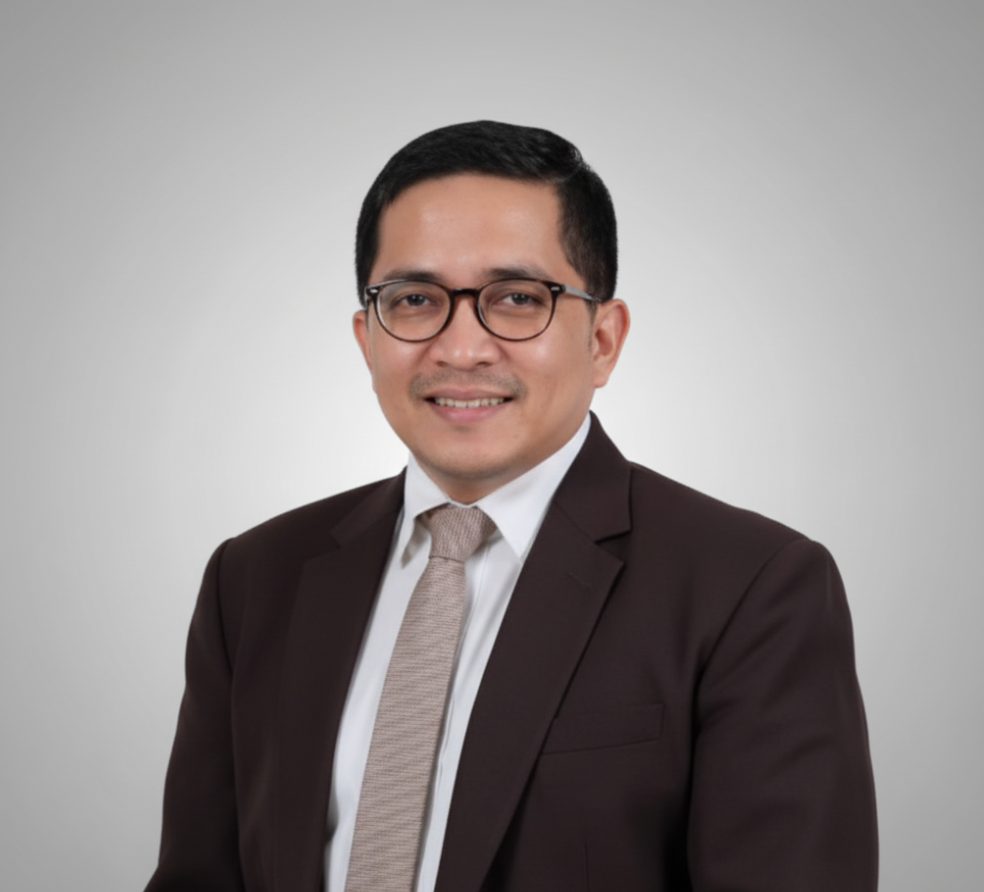
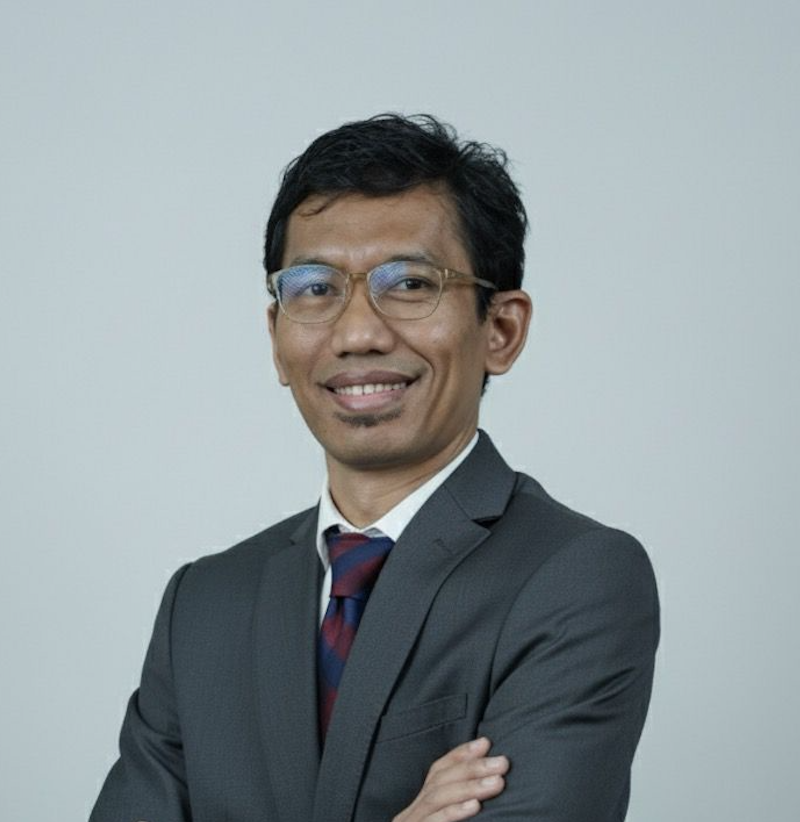
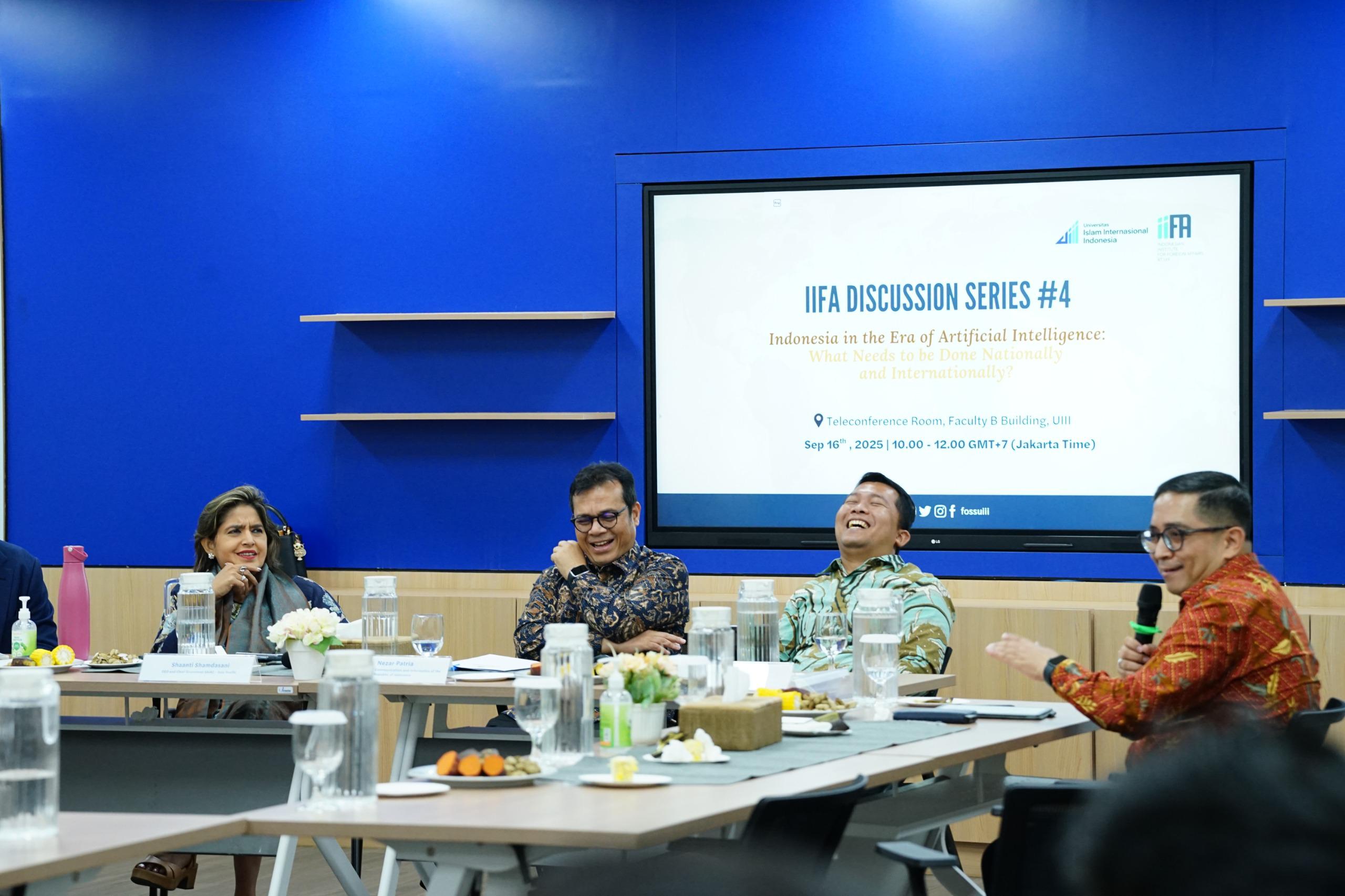
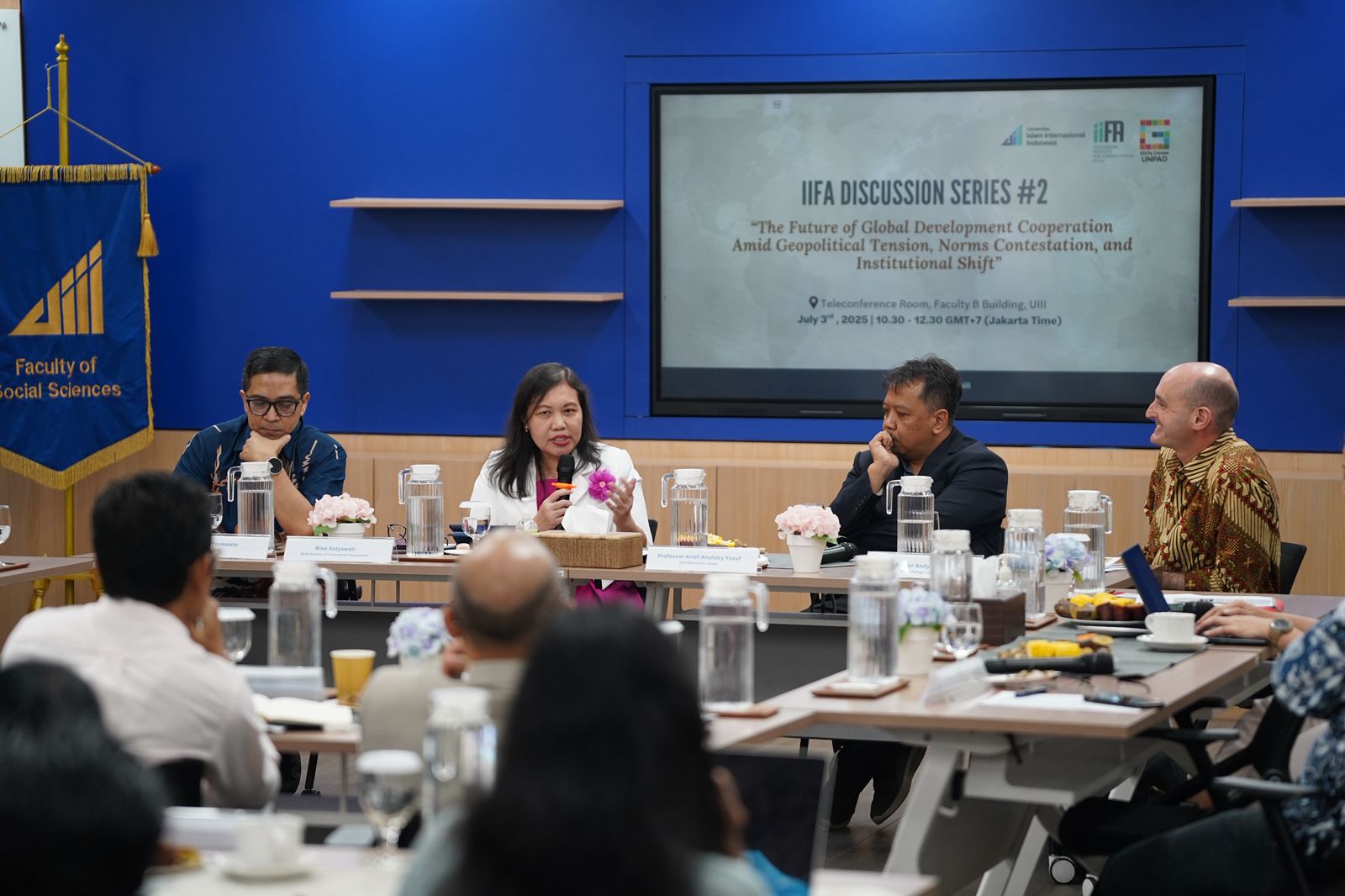
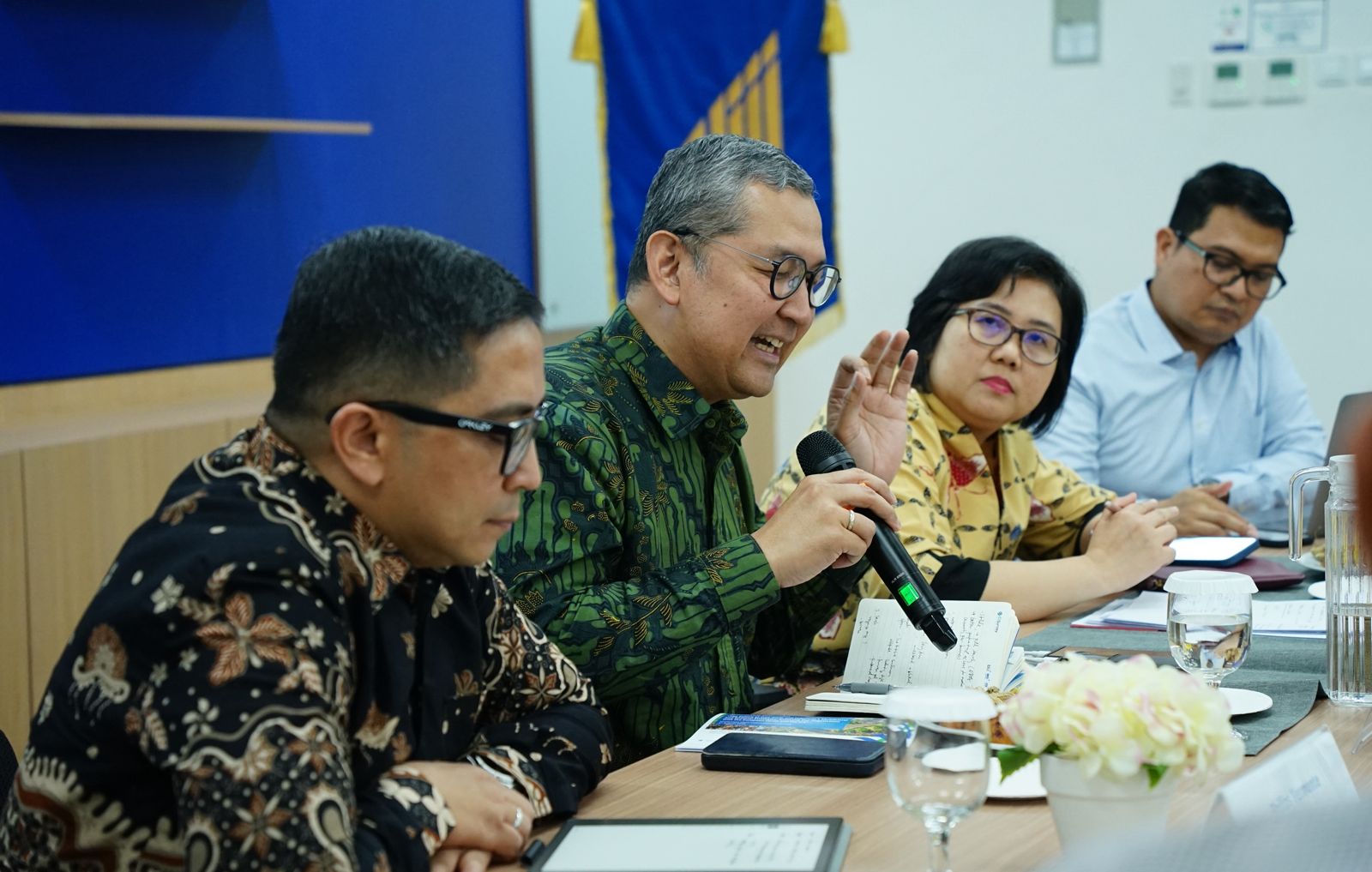
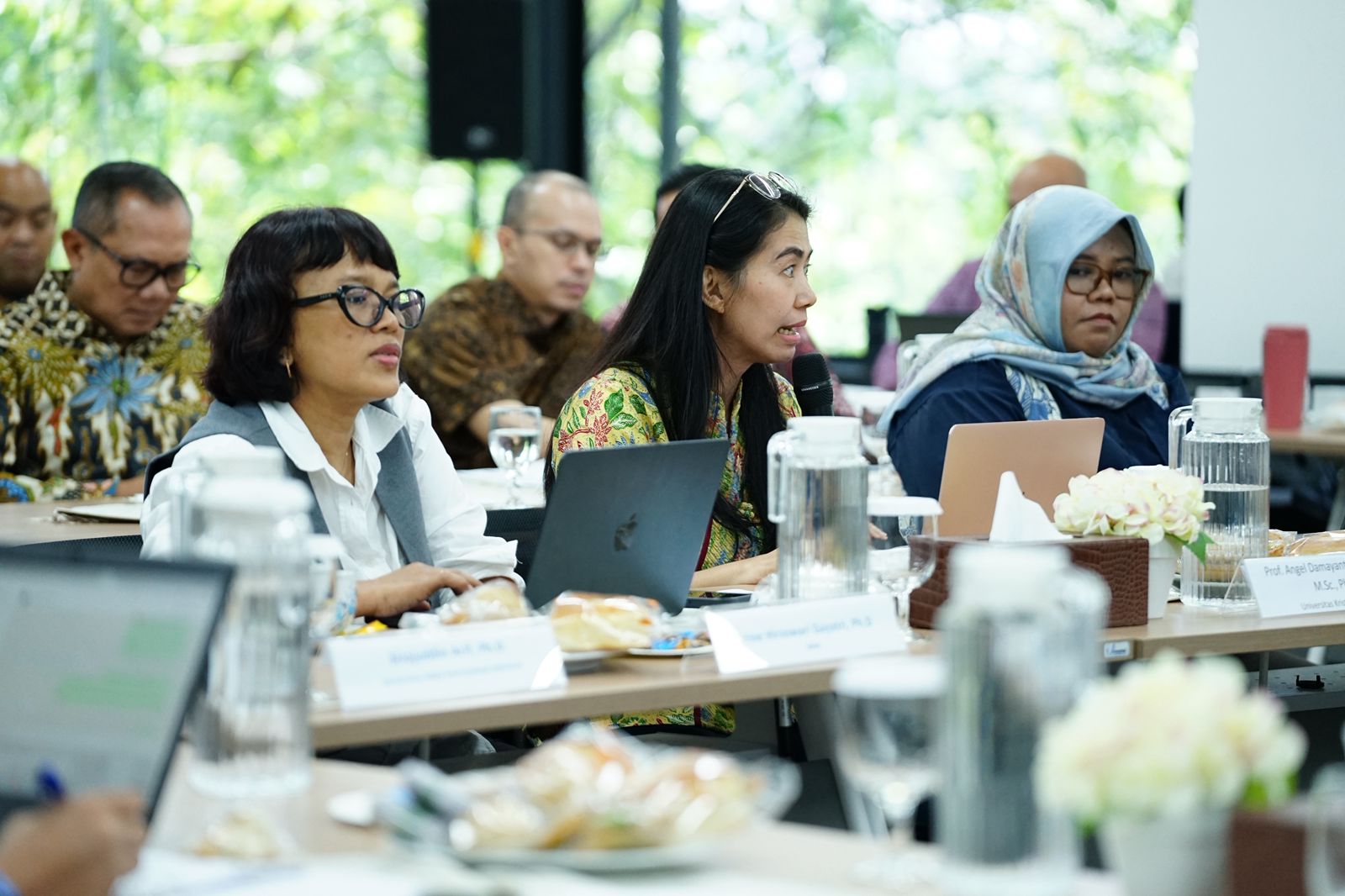
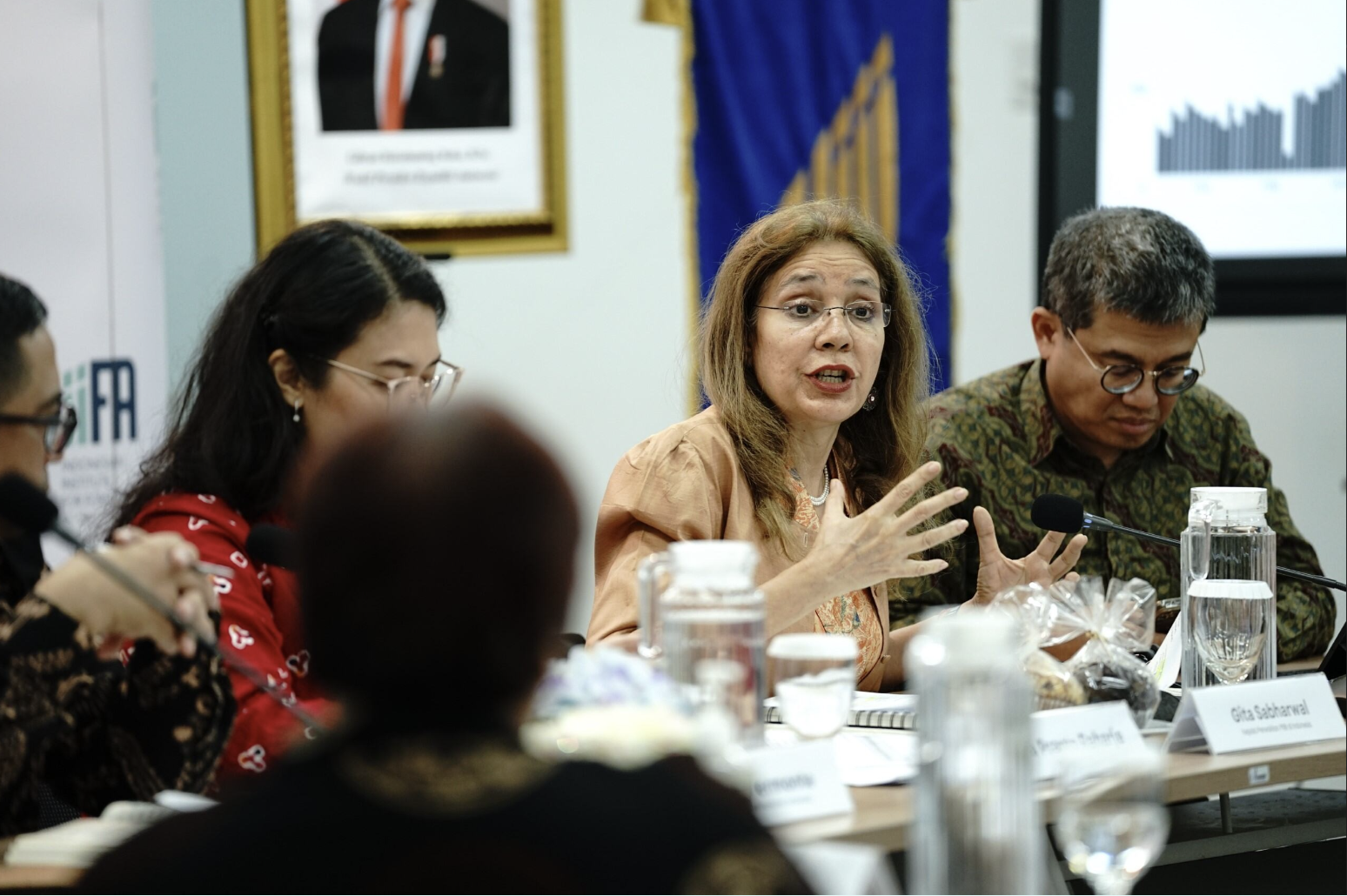
[Depok, Indonesia] — The IIFA at the Indonesian International Islamic University (UIII) successfully concluded its fourth monthly roundtable discussion on artificial intelligence (AI) in Indonesia on Tuesday (16/9) at the UIII campus. The discussion aimed to explore the challenges and opportunities of AI adoption in Indonesia. The panelists were Nezar Patria (Vice Minister of Communication and Digital Services), Shaanti Shamdasani (CEO of Strategic ASEAN International Advocacy and Consultancy), and Tyovan Ari Widagdo (CEO of Vemebo). Muhammad Al Atiqi, Ph.D. (Lecturer, UIII) served as the discussant, and Dr. Philip. J. Vermonte, Ph.D. (Dean, Faculty of Social Sciences, UIII), is moderating the discussion.
Three takeaway points from the discussion. First, Indonesia needs to determine the level of AI adoption before regulating AI. The basic question to be answered is whether Indonesia wants to be a user or a producer in AI. Al Atiqi raised the question of what Indonesia's vision is on AI development. Vice Minister Nezar Patria stated that Indonesia is still at the early stage of AI development. However, he continued, the ministry, in collaboration with UNESCO, has already completed the AI Readiness Assessment, which makes Indonesia the first country in ASEAN to complete such a document. Nezar also said that the ministry is currently working on an AI Roadmap planned to be published in early 2026.
Second, Indonesia’s opportunity in AI lies in the country’s position as a major producer of critical minerals essential for chip production, including nickel, copper, and cobalt. Shaanti argued that with such potential, Indonesia could play a leadership role in affordable, scalable AI for developing nations. She provided examples of AI tools for rural health, disaster early warning systems, and food security. However, Shaanti and Tyovan agreed that the country’s main problem is in human resources, especially in talent development. Tyovan added that Indonesia lacks investment in AI and has lagged behind Vietnam and Malaysia in this area. They hope that the AI Roadmap formulated by the Ministry of Communication and Digital Services can address this problem.
Lastly, the greatest challenge faced by Indonesia lies in striking the right balance between regulation and innovation. Dean Vermonte, in concluding the discussion, emphasized this point. He said that overregulation could stifle investment, hinder creativity that leads to slow adoption, and limit the societal benefits of AI. On the other hand, unregulated AI could harm the public in general as it may perpetuate disinformation and abuse, leaving citizens vulnerable. Thus, the government should address this problem through finding the right level of regulation for AI in Indonesia.
The Roundtable Discussion Series is a monthly event organized by IIFA. The Institute is a university-based think tank at UIII. The inaugural roundtable, held in June 2025, explored the topics of international conflict, focusing on how Hugo Grotius’s thinking influences the use of force in contemporary international conflicts and Indonesia's response to this issue.