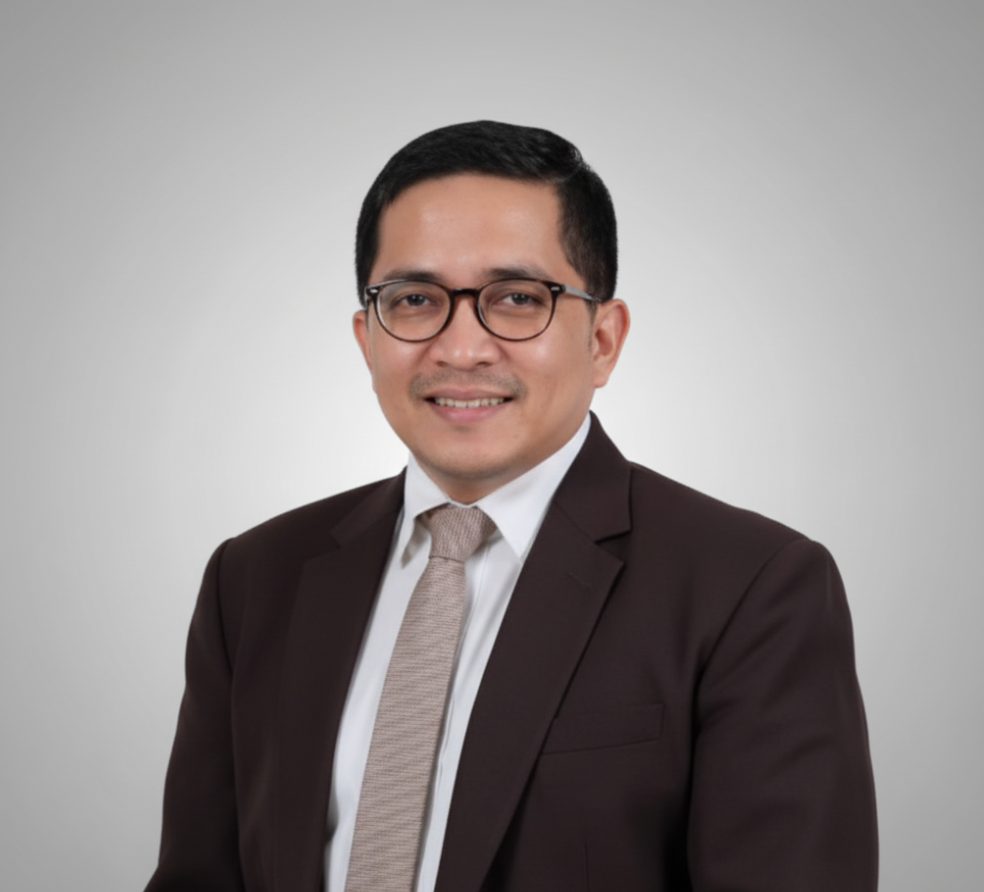
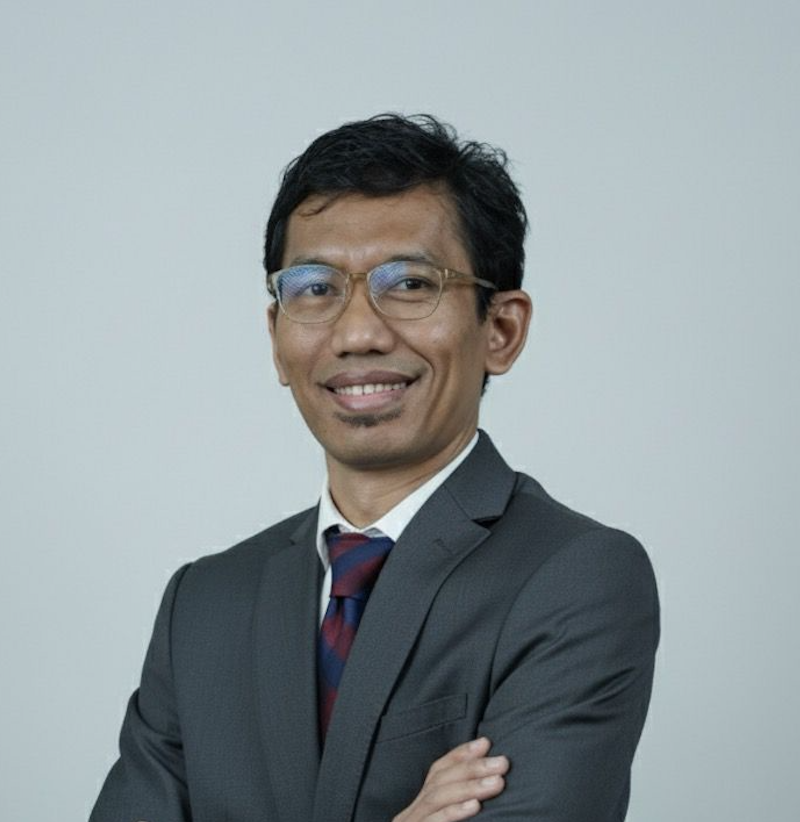
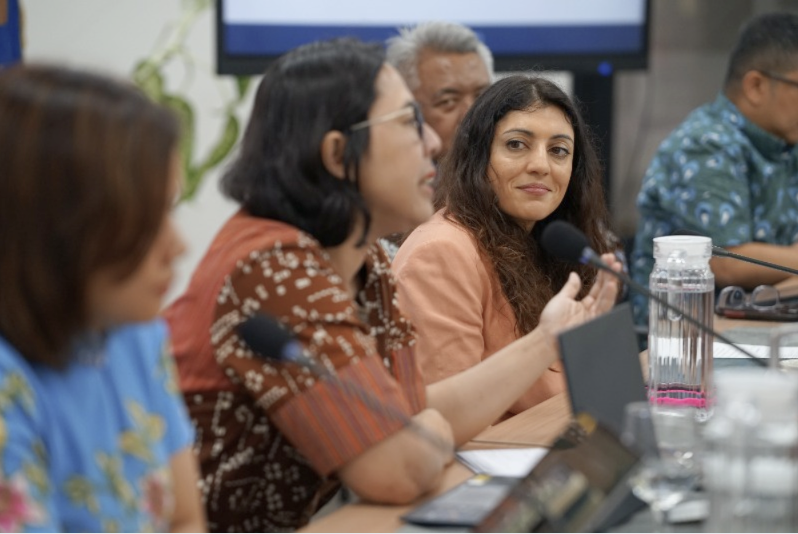
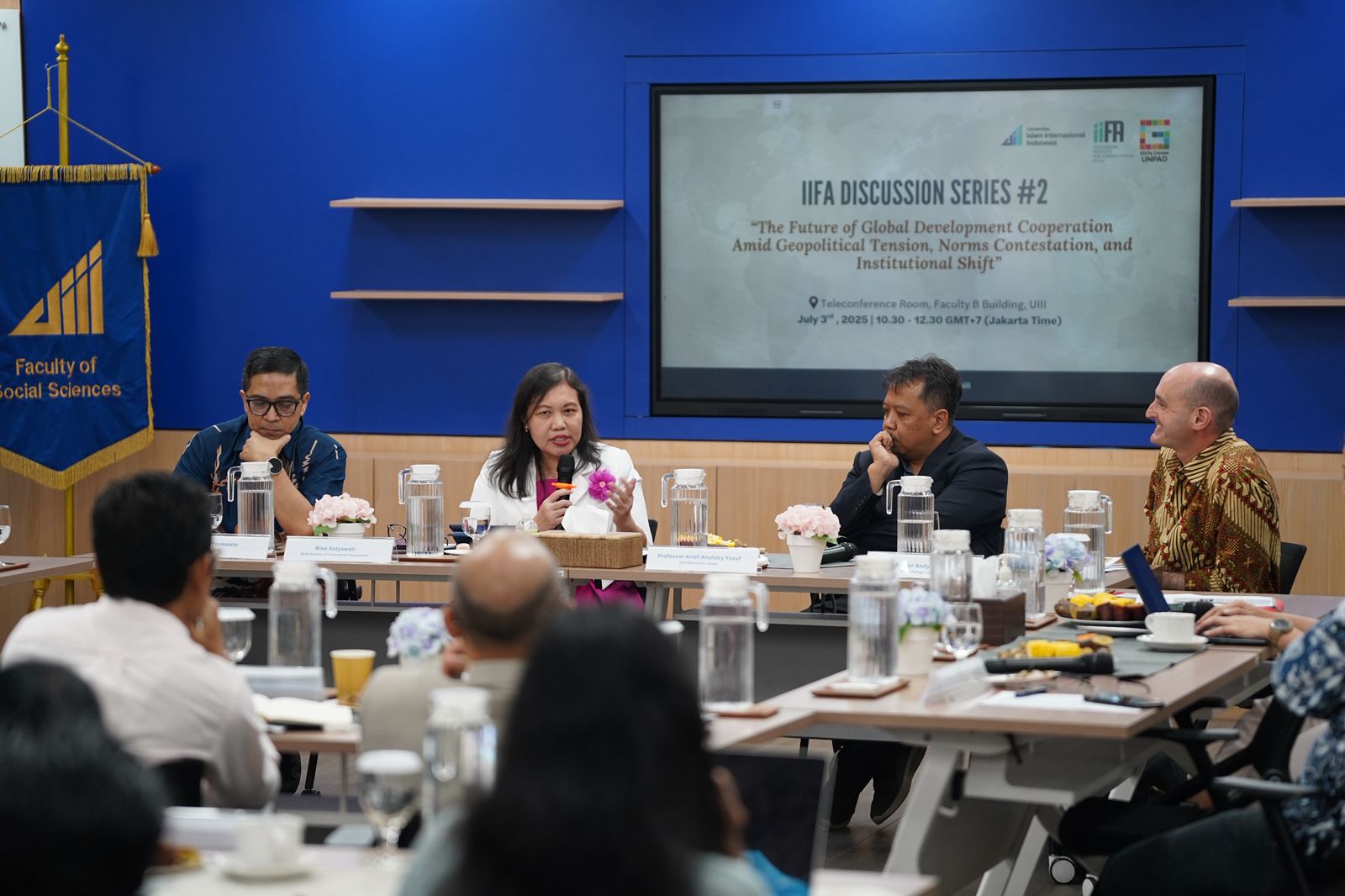
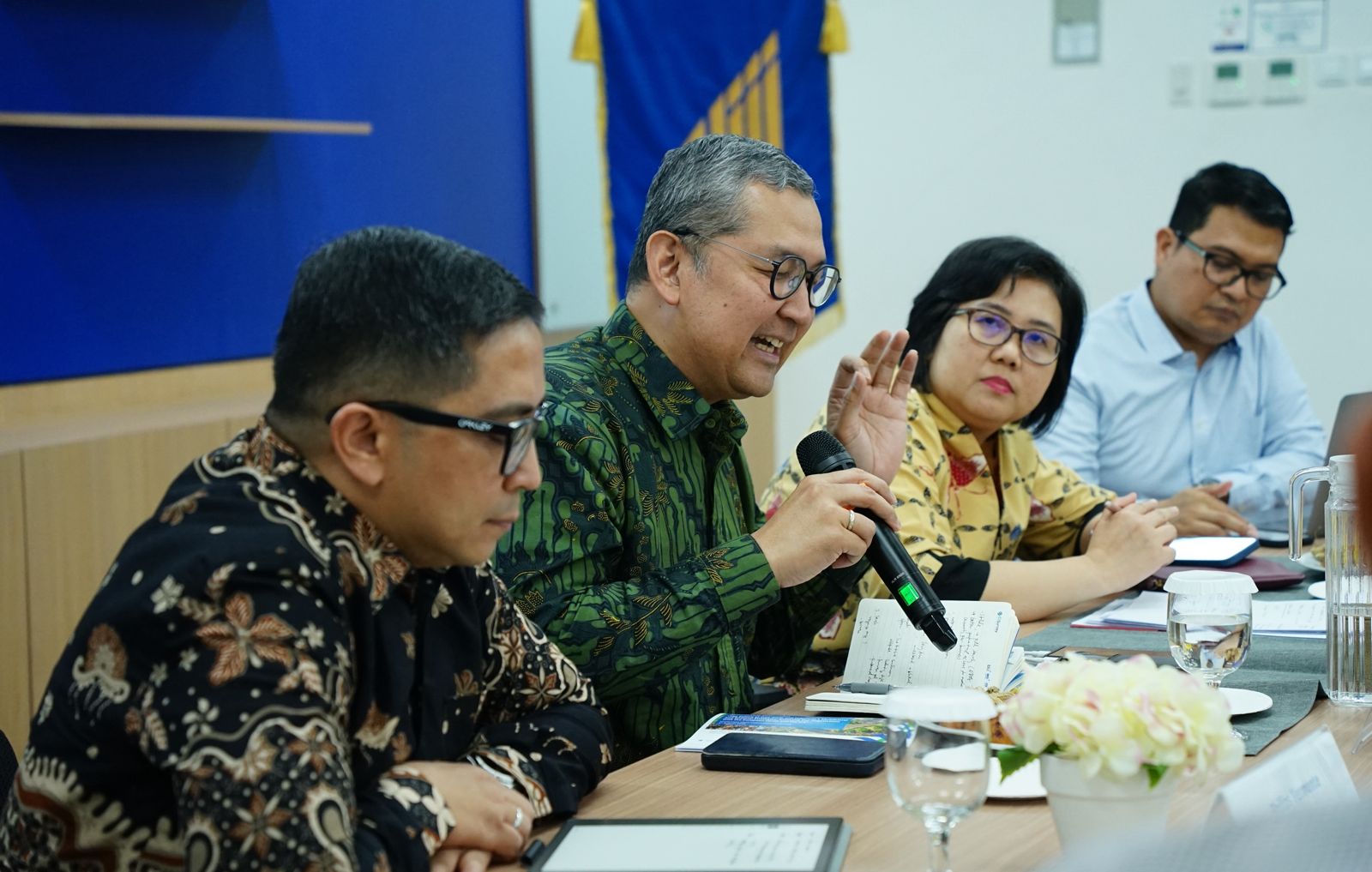
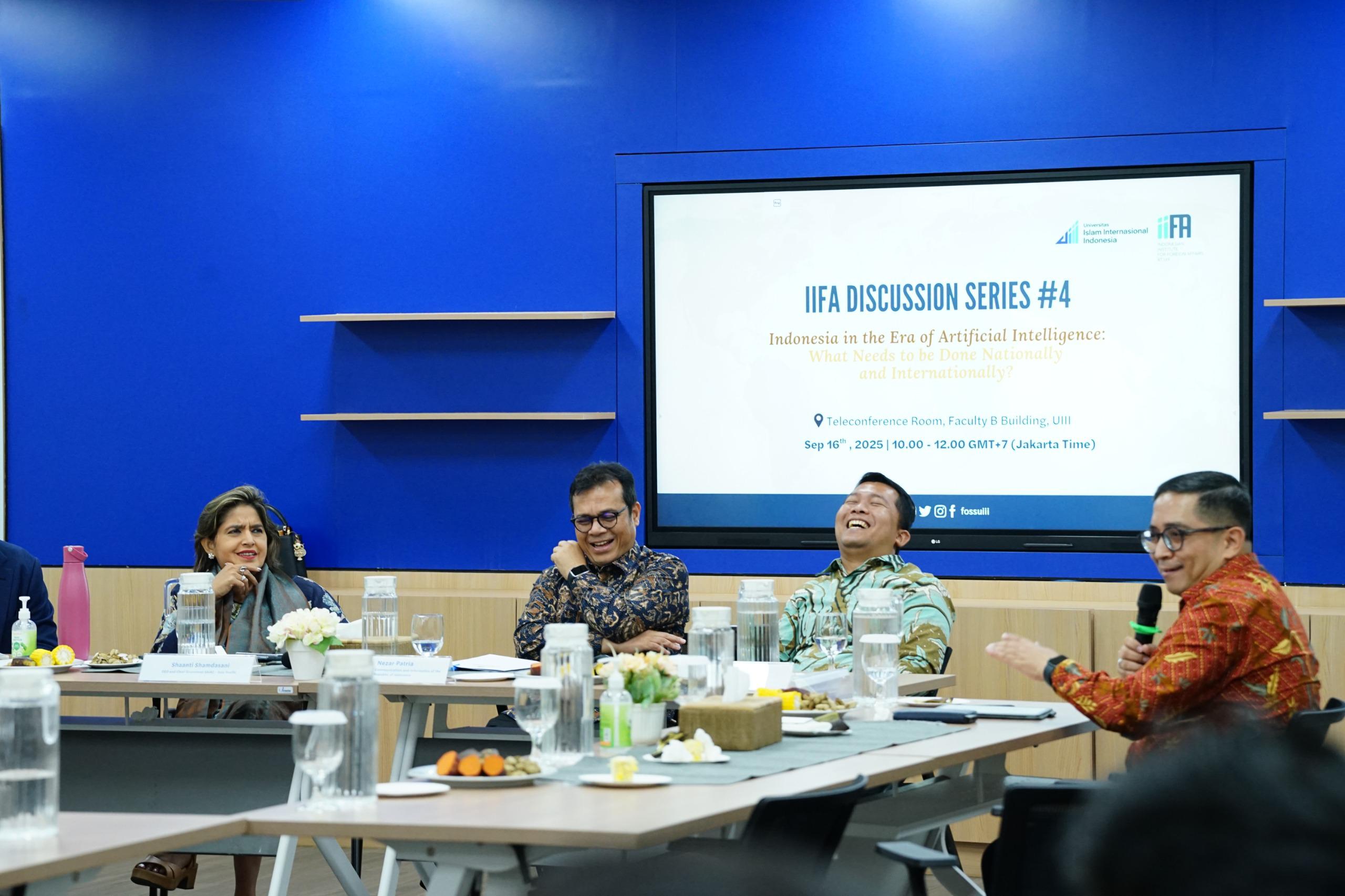
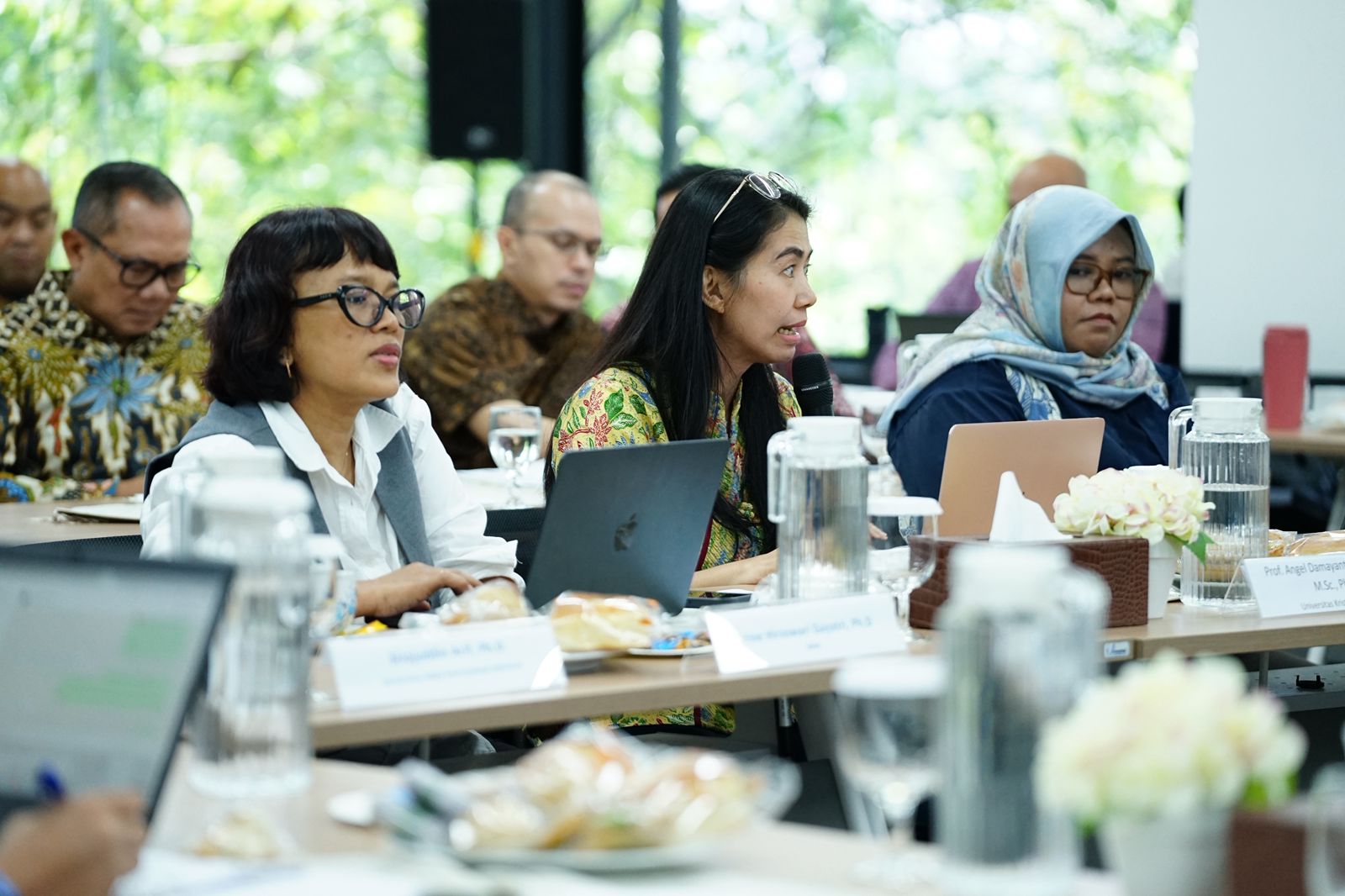
The Public Discussion on Indonesia’s Accession to the OECD: Perspectives from Academics and Think-Tanks, a collaborative event between the Ministry of Foreign Affairs and IIFA UIII, attracted significant attention, as reflected in the large number of attendees and the highly engaging and continuous interactions throughout the session. The event opened with remarks by Masni Eriza, Director / Chief Strategist of the Centre for Multilateral Policy Strategy at the Foreign Policy Strategy Agency, Ministry of Foreign Affairs, and Philips J. Vermonte, IIFA Scholar and Dean of the Faculty of Social Sciences at UIII. The discussion was further enriched by distinguished speakers, Gita Kothari, Director for Legal Affairs and OECD Accession Coordinator, and Rima Prama Artha, IIFA Scholar and Lecturer at the Faculty of Economics and Business, UIII, who delivered valuable and thought-provoking insights from both policy and academic perspectives.
From a global institutional perspective, Gita Kothari highlighted the strategic significance of Indonesia’s accession to the OECD, emphasizing its role in promoting better policies for better lives, strengthening investor confidence, and serving as a catalyst for structural reforms. She also underlined Indonesia’s growing importance as a global player, whose experiences in governance, financial inclusion, and crisis resilience can contribute to shaping OECD standards and practices. Meanwhile, Rima Prama Artha provided an academic and evidence-based perspective, stressing that OECD membership is not merely symbolic but serves as a long-term reform mechanism. Drawing on empirical studies, she explained its potential impact on improving governance quality, enhancing trade openness, and strengthening institutional capacity. She also pointed out that while Indonesia has aligned with many OECD standards, key challenges remain in implementation, regulatory gaps, and ensuring sustained policy reform through a whole-of-society approach involving government, academia, and think tanks.